Future of Automation in Material Handling
The days of a crane operator sitting in a cab for 8 hours are numbered. Industry 4.0 is transforming cranes from dumb lifting machines into intelligent robots. Here is what the future holds.
1. Anti-Sway Technology
Swinging loads are the biggest enemy of productivity. Modern VFDs now come with built-in "Anti-Sway" algorithms.
How it works: The drive calculates the pendulum period of the load based on the rope length. It then adjusts the acceleration and deceleration curves to cancel out the swing automatically. This allows even novice operators to move loads like pros.
2. Semi-Automated Positioning
Instead of manually jogging the crane to a specific spot, the operator can simply select "Station B" on a touchscreen. The crane uses laser positioning systems to travel to the exact coordinates automatically, avoiding obstacles along the way.
3. Fully Autonomous Cranes
In waste-to-energy plants and steel coil yards, cranes already operate 24/7 without humans.
- Vision Systems: Cameras scan the pit to identify the highest pile of trash.
- AI Optimization: The crane decides the most efficient path to mix and feed the incinerator.
4. IoT and Predictive Maintenance
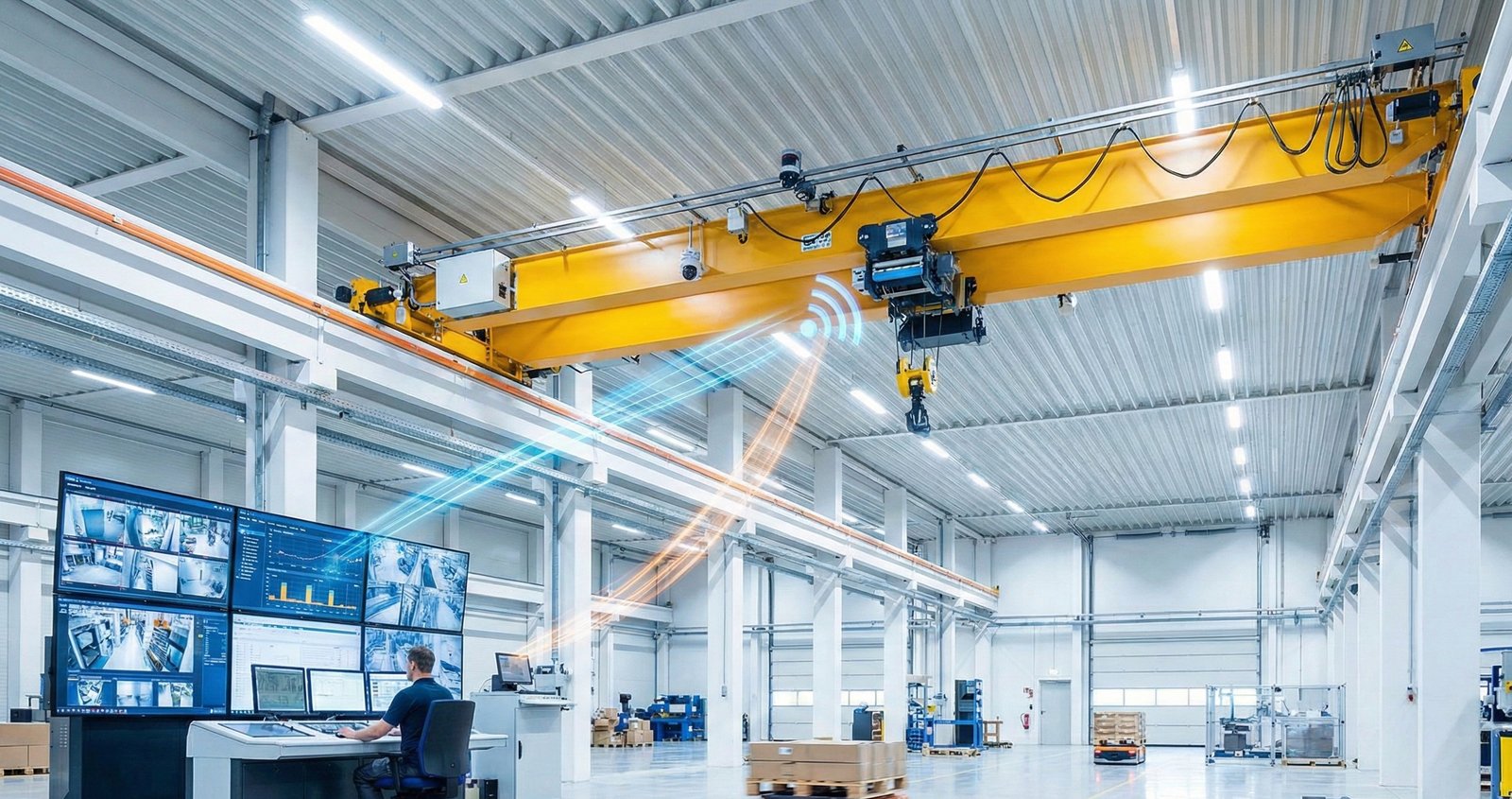
Cranes are now connected to the cloud.
- Real-time Monitoring: Managers can see the status of every crane on their phone.
- Predictive Alerts: "Gearbox vibration is increasing. Replace bearing in 2 weeks." This prevents unexpected downtime.
5. Remote Operation Centers
Why have an operator in a hot, dusty steel mill? With 5G and low-latency video feeds, operators can sit in an air-conditioned office miles away and control the crane using joysticks and screens.
The Takeaway: Automation isn't just about replacing jobs; it's about removing humans from dangerous environments and increasing throughput.