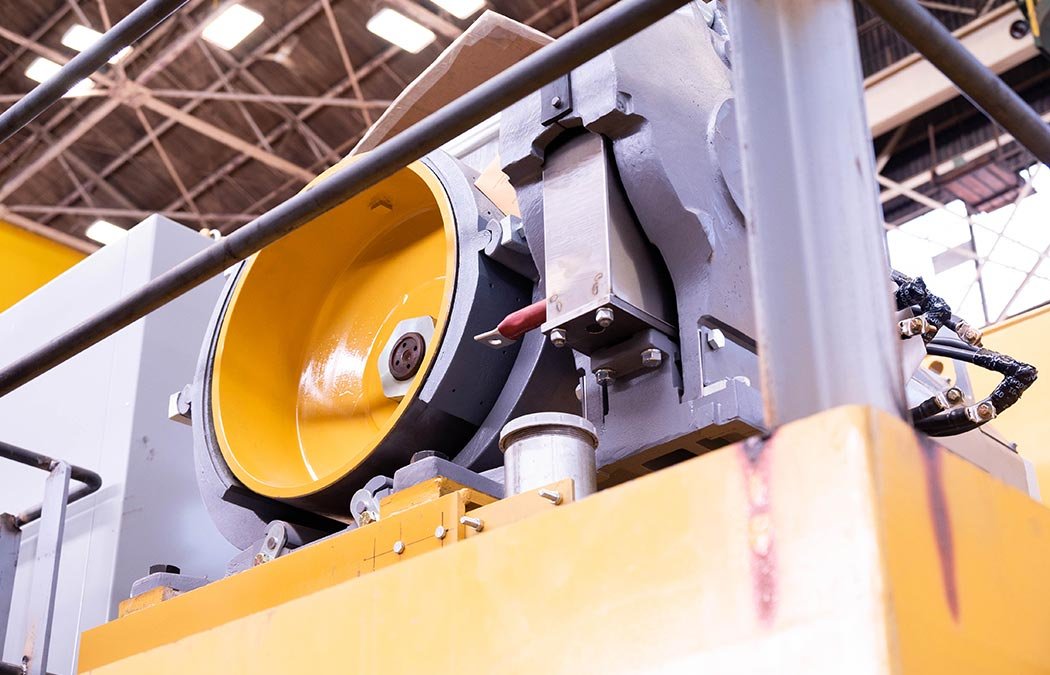
Choosing the Right Crane Brake: Thruster vs. DC
Brakes are the most critical safety component on any crane. If the motor fails, the brake must hold the load. But not all brakes are created equal. Let's compare the two most common types: Electro-Hydraulic Thruster (EHT) brakes and DC Electromagnetic brakes.
1. Electro-Hydraulic Thruster (EHT) Brakes
These are the industry standard for heavy-duty EOT cranes. They use a small hydraulic pump (thruster) to release the brake shoes against a spring.
Pros:
- Soft Braking: The hydraulic action provides a smooth, cushioned stop, reducing shock loads on the gearbox and structure.
- High Torque: Capable of handling very large loads.
- Durability: Excellent heat dissipation, making them ideal for high duty cycles.
Cons:
- Response Time: Slightly slower to set than DC brakes (milliseconds matter in precision lifting).
- Maintenance: Requires checking oil levels and seals in the thruster.
2. DC Electromagnetic Brakes
These use a magnetic coil to pull a plate and release the brake disc. When power is cut, springs clamp the disc instantly.
Pros:
- Fast Response: Almost instantaneous engagement. Great for precise inching and positioning.
- Compact: Usually mounted on the back of the motor (fail-safe disc brakes).
- Clean: No hydraulic fluid to leak.
Cons:
- Hard Stop: Can be jerky ("snatchy") if not adjusted correctly.
- Heat: The coil can overheat if the air gap is too large.
3. Which One Should You Choose?
For Main Hoists: Use EHT Brakes. The smooth braking protects the gearbox from shock loads when stopping a heavy load.
For Travel Motions (CT/LT): Use EHT Brakes or Soft-Start Drives. Hard braking on travel causes load swing.
For Small Hoists (< 5 Ton): DC Disc Brakes are standard, compact, and cost-effective.
Maintenance Tip: Check brake lining thickness monthly. If the rivets are exposed, they will score the brake drum, leading to costly repairs.