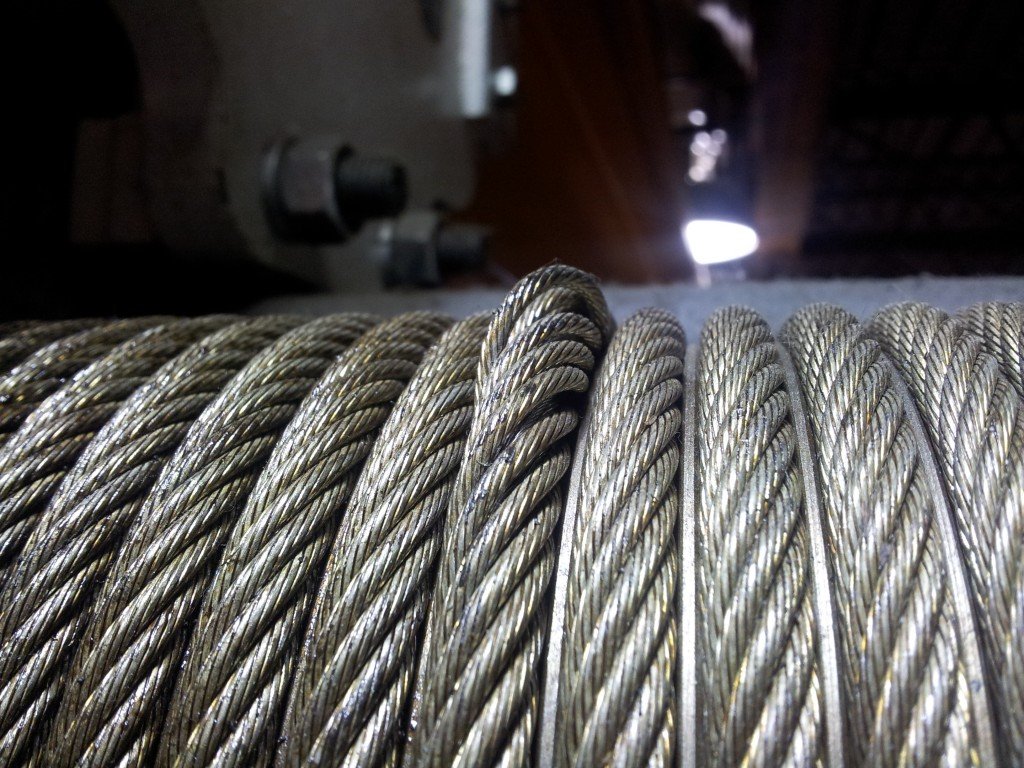
Wire Rope Inspection: When to Replace?
The wire rope is often considered the most critical component of an EOT crane. It bears the entire load and is subject to constant bending, tension, and abrasion. Failure of a wire rope can be catastrophic, leading to dropped loads, equipment damage, and severe injury. Knowing when to retire a wire rope is not just a maintenance decision—it's a safety imperative.
This guide outlines the key inspection criteria based on ISO 4309 standards to help you determine when your crane's wire rope has reached the end of its safe service life.
1. Broken Wires (Visible Wire Breaks)
Wire breaks are the most common sign of fatigue. As the rope bends over sheaves and drums, the individual wires fatigue and eventually snap. ISO 4309 provides specific limits for the number of allowable broken wires over a length of 6d (6 times the rope diameter) and 30d.
Rule of Thumb: If you see multiple broken wires clustered together in a short section, or if there are wire breaks at the termination points, immediate replacement is often required.
2. Diameter Reduction
A reduction in the rope's diameter indicates either structural degradation of the core or excessive external wear. This is critical because a thinner rope has a lower breaking strength.
- External Wear: Caused by abrasion against sheaves and drums.
- Internal Wear: Caused by friction between strands or core failure.
Discard Criteria: If the diameter has reduced by 7% or more of the nominal diameter (for fiber core ropes) or 3-5% (for steel core ropes), the rope should be discarded.
3. Corrosion
Corrosion weakens the rope by reducing the metallic cross-sectional area and causing fatigue pits. It is particularly dangerous because internal corrosion can be hard to detect visually.
- Surface Corrosion: Light surface rust that can be wiped off is generally acceptable but should be monitored.
- Severe Corrosion: If there is pitting of wires or the rope feels slack due to internal corrosion, it must be replaced immediately.
4. Deformation and Kinking
Deformations distort the rope structure, causing uneven stress distribution. Common types include:
- Kinking: A sharp bend caused by a loop being pulled tight. This is permanent damage and requires immediate replacement.
- Bird Caging: The strands open up in a cage-like formation. This usually happens due to shock loading or sudden release of tension.
- Crushed Strands: Often caused by improper spooling on the drum.
5. Heat Damage
Exposure to extreme heat (e.g., in foundries) can anneal the steel wires, causing a loss of tensile strength. Signs of heat damage include discoloration (bluish hue) or loss of lubrication. If heat damage is suspected, the rope must be replaced.
Summary Checklist for Inspection
| Defect Type | Action Required |
|---|---|
| Visible Broken Wires | Check against ISO 4309 count limits. |
| Diameter Reduction > 7% | Discard Immediately |
| Kinking / Bird Caging | Discard Immediately |
| Severe Corrosion (Pitting) | Discard Immediately |
Regular inspections are the first line of defense against crane accidents. Always consult a certified inspector if you are unsure about the condition of your wire rope.