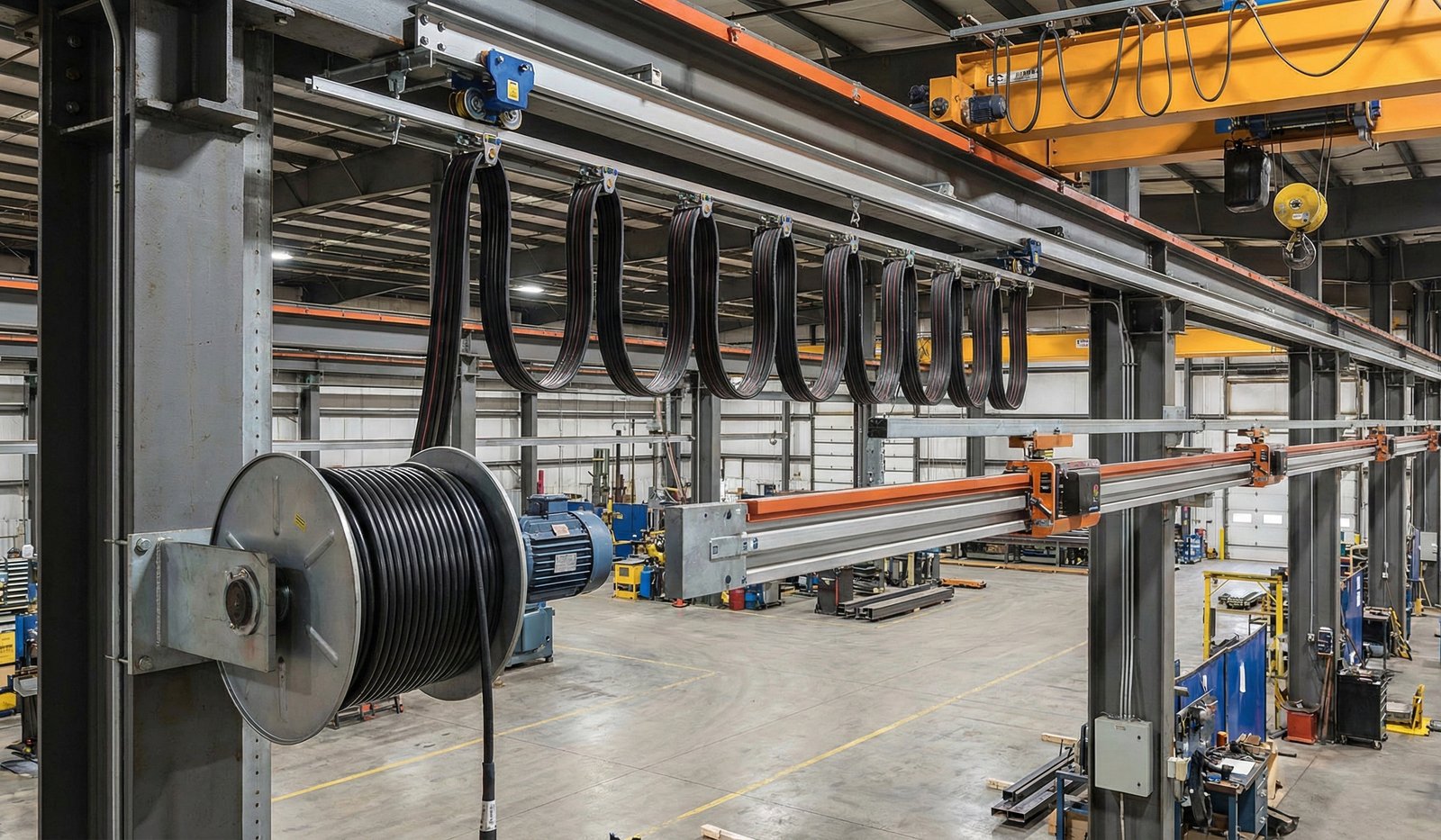
DSL Busbar Current Rating for EOT Cranes
Quick Answer
Do not accept only "DSL included" in a quote. Ask for the busbar amp rating, crane full-load current, number of cranes sharing the bay, simultaneity factor, collector rating, conductor material, feed arrangement, and voltage drop calculation.
Busbar current rating is often treated as a small accessory choice, but under-rating causes heating, nuisance trips, collector wear, and weak voltage at the far end of the runway.
Current Rating Inputs
| Input | What to Ask | Why It Matters |
|---|---|---|
| Crane FLC | Full-load current for each crane, not only motor kW. | Prevents guessing from nameplate power alone. |
| Number of cranes | How many cranes share the same conductor line. | Shared demand can exceed a low busbar rating. |
| Simultaneity | Worst-case and practical operating diversity. | Helps avoid both under-design and over-design. |
| Collector rating | Rating, quantity, make, shoe type, spare availability. | Collectors are common failure and maintenance points. |
| Ambient and duty | Heat, dust, humidity, outdoor exposure, duty cycle. | Derating may be needed in harsh sites. |
Vendor Red Flags
- Quote says "standard DSL" without make, model, rating, or material.
- Collector rating is not stated separately.
- Multiple cranes share one bay but only one crane current is considered.
- No voltage drop statement is provided for a long runway.
- No spare collector shoes or maintenance parts are included.
FAQ
Can I simply choose the next standard busbar size?
Only after checking actual current, voltage drop, duty, feed arrangement, and collector details. A standard rating can still be wrong if the runway is long or multiple cranes share the bay.
Should I ask for copper or aluminum busbar?
Both can work when correctly designed. Ask for conductor material, resistance data, voltage drop basis, joint design, and manufacturer datasheet before comparing cost.