EOT Crane DSL & Busbar System: Complete Beginner Guide
Quick Answer
An EOT crane DSL or busbar system supplies power along the crane runway. Buyers should compare current rating, conductor material, voltage drop, feed arrangement, number of cranes, collector rating, shrouding, joints, expansion, spare capacity, and maintenance access before approving the BOM.
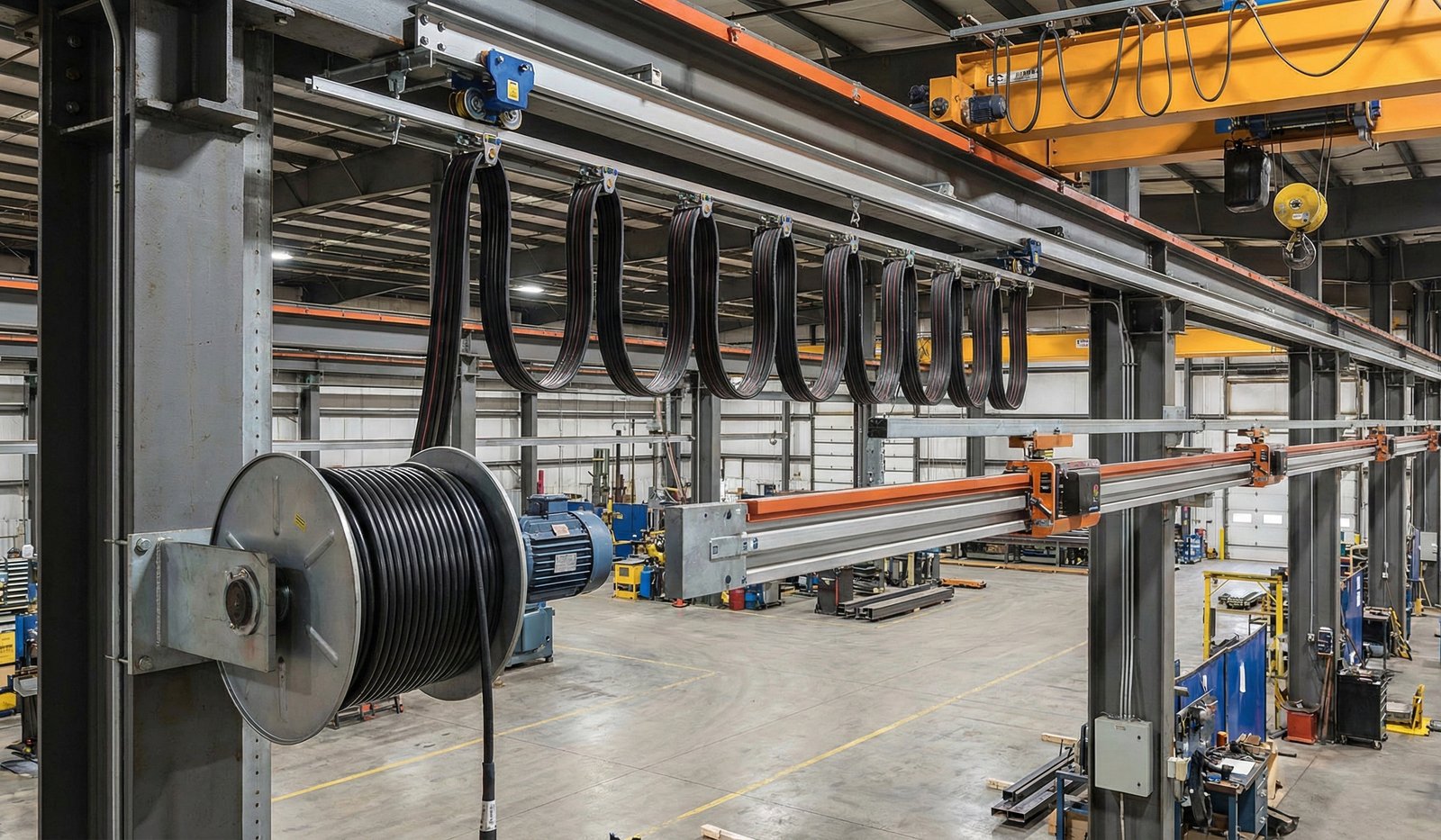
An EOT crane cannot use a fixed power cable like a stationary machine. The crane bridge moves along the runway, the trolley moves across the bridge, and the hoist moves the load up and down. The DSL or busbar system is the moving power supply that keeps all of this alive.
For a new buyer, DSL can look like a small line item in the quotation. In reality, it directly affects safety, uptime, voltage stability, maintenance, and the quality of the crane installation. A weak electrification system can make a good crane feel unreliable.
Plain-English summary: DSL or busbar is the power track installed along the crane runway. A collector mounted on the crane slides along this track and picks up power as the crane moves.
DSL / Busbar Topic Hub
Use these focused guides when you need to compare vendor quotes or check the electrical design basis.
What Is DSL in an EOT Crane?
DSL usually means Down Shop Leads. In practice, buyers use the term for the runway electrification system that supplies power to the moving EOT crane. The most common modern version is a shrouded busbar system.
A shrouded busbar system has insulated housing, internal conductors, feed points, joints, hangers, end caps, and current collectors. The collector shoe remains in contact with the conductor while the crane travels.
Why Cranes Need a Moving Power Supply
The crane needs continuous power during long travel, cross travel, hoisting, braking, controls, lights, sirens, limit switches, and safety devices. If the power supply is unstable, the crane may trip, slow down, spark, heat up, or stop unexpectedly.
This is why DSL selection should not be left vague in the quote. The vendor should declare the current rating, conductor type, make, collector details, installation scope, and voltage drop assumptions.
Main Parts of a Shrouded Busbar System
- Conductor: The copper, aluminum, or steel-backed conductor that carries current.
- Housing: The insulated enclosure that protects people from live conductors.
- Current collector: The moving contact assembly that picks up power from the busbar.
- Collector shoe: The wearing contact surface inside the collector.
- Hangers and brackets: Supports that hold the busbar along the runway.
- Joint kits: Connect busbar sections and maintain electrical continuity.
- Feed point: The point where incoming power enters the busbar system.
- End cap: Covers the live ends and protects the system from accidental contact.
Shrouded Busbar vs Festoon vs Cable Reel
There is no single best system for every crane. The correct choice depends on crane type, travel length, current requirement, environment, cable needs, and maintenance preference.
| System | Best Use | Strength | Common Risk |
|---|---|---|---|
| Shrouded Busbar / DSL | Indoor EOT crane runway power | Compact, clean, safer than open conductors | Undersized rating, poor collectors, bad joints |
| Festoon Cable | Hoist/trolley power and control cables | Flexible and simple for moving trolleys | Cable bunching, cable wear, trolley snagging |
| Cable Reel | Outdoor gantry cranes or ground travel | Works where fixed busbar is impractical | Spring tension, cable wear, reel alignment |
| Open Conductor | Old installations | Simple but outdated | High safety risk due to exposed live conductors |
How to Think About Current Rating
The busbar current rating should match the crane's electrical load and operating pattern. It is not enough to copy the motor nameplate values casually. The vendor should consider hoist motor, travel motors, controls, brakes, lights, magnets or grabs if applicable, and future additions if the buyer expects upgrades.
For a beginner, the simplest question is: "What amp rating have you selected, and what connected load did you use to select it?" A serious vendor should answer clearly.
Voltage Drop in Simple Terms
Voltage drop means the voltage available to the crane reduces as the crane moves farther away from the power feed point. Long runway length, insufficient conductor size, poor joints, and high current demand can make this worse.
If voltage drop is too high, the crane may behave badly at the far end of the bay: motors may struggle, contactors may chatter, VFDs may trip, and the crane may feel unreliable even when the mechanical system is fine.
Common DSL and Busbar Failure Points
- Collector shoe wear causing sparking, heating, or intermittent power loss.
- Loose or poorly installed joints causing hot spots.
- Incorrect hanger spacing causing misalignment.
- Missing end caps or damaged housing creating safety exposure.
- Wrong current rating causing heating and voltage drop.
- Dust, humidity, corrosion, or heat not considered during selection.
- Festoon cable loops snagging because parking length or trolley spacing was ignored.
Maintenance Checklist
- Inspect collector shoe wear and replace before contact becomes poor.
- Check busbar joints for heating, discoloration, or looseness.
- Confirm hangers and brackets are secure and not sagging.
- Look for cracked housing, missing covers, damaged end caps, and exposed conductors.
- Clean excessive dust or debris where it can affect collector movement.
- For festoon systems, check cable jacket damage, trolley movement, clamps, and bend radius.
- Record recurrent trips or sparking as a maintenance issue, not an operator complaint.
Safety Red Flags
- Open live conductors in reachable areas.
- Damaged busbar housing with exposed conductor.
- Loose collectors, excessive sparking, or burning smell.
- Missing end caps, poor earthing, or unclear isolation points.
- No documentation of busbar make, amp rating, and installation layout.
When Should You Upgrade Old DSL?
Consider upgrading if the system has open conductors, repeated sparking, frequent collector failures, poor voltage at the far end, cracked insulation, missing guards, or no reliable spare support. Many old cranes are mechanically usable but electrically unreliable because the electrification has aged badly.
Beginner Buyer Checklist
- Ask for busbar/DSL make, current rating, number of poles, and conductor material.
- Ask whether voltage drop has been checked for the full runway length.
- Ask how many collectors are supplied and whether spare shoes are included.
- Confirm feed point, isolator, end caps, joints, hangers, and installation brackets are included.
- Confirm outdoor, dusty, humid, hot, or corrosive conditions are considered.
- Ask for maintenance instructions and first-year recommended spares.
Need to compare vendor quotations?
This article explains the system. The buying guide gives you the RFQ points, BOM comparison checklist, vendor questions, red flags, and FAT/SAT checks.
Open the DSL / Busbar Buying Guide Try the Voltage Drop Calculator