Cable snags
Check loop depth, travel path and clamp position so moving cables do not hit structure, load or platform edges.
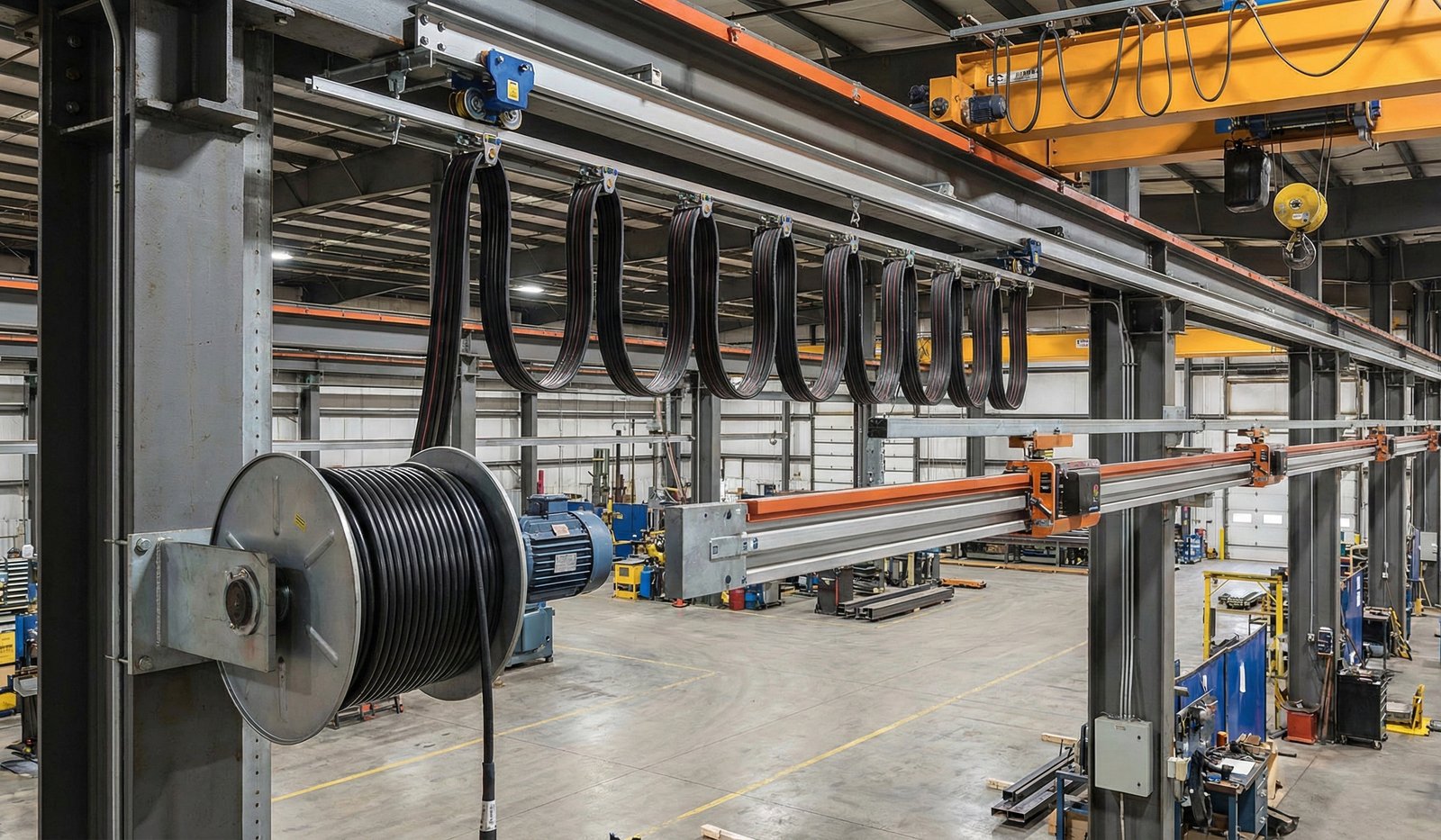
Specify festoon cable rating, trolley spacing, loop depth, bending radius, clamps and outdoor protection so cable failures do not become repeated stoppages.
Quick answer
A festoon system should define cable type, current rating, number of cores, trolley/track type, trolley spacing, loop depth, minimum bending radius, clamp details, end stops, junction boxes, outdoor protection and maintenance access. Do not accept a quote where moving cable supply is described only as "festoon included".
Check loop depth, travel path and clamp position so moving cables do not hit structure, load or platform edges.
Confirm flexible cable type, bending radius and strain relief instead of treating the cable as ordinary wiring.
Ask for weather protection, corrosion resistance and drainage details where the crane operates outdoors.
| Field | What to ask | Why it matters | Red flag |
|---|---|---|---|
| Cable type and rating | Flexible cable type, voltage/current rating, number of cores and spare cores. | Moving-duty cable must suit repeated bending and current load. | Ordinary cable used for moving service. |
| Trolley and track | C-rail/I-beam system, trolley type, wheel material and load capacity. | Poor rolling causes cable drag and damage. | Trolley details missing. |
| Trolley spacing | Number of trolleys, spacing and loop distribution. | Incorrect spacing creates uneven loops and cable strain. | Only total cable length stated. |
| Bending radius | Minimum bending radius and loop depth calculation. | Tight bends shorten cable life. | Loops are too tight or touch obstacles. |
| Clamps and strain relief | Clamp type, grip area, end strain relief and junction box interface. | Bad clamps cut or crush cable sheathing. | Cable tied or clamped casually. |
| Outdoor protection | Rain, dust, UV, corrosion, wind movement and drainage provisions. | Outdoor festoons fail early without protection. | No environment basis. |
| Maintenance access | Access method, spare cable/trolley details and replacement procedure. | Cables and trolleys are service items. | No spare or access plan. |
Send this when festoon or moving cable details are missing in a crane quotation.