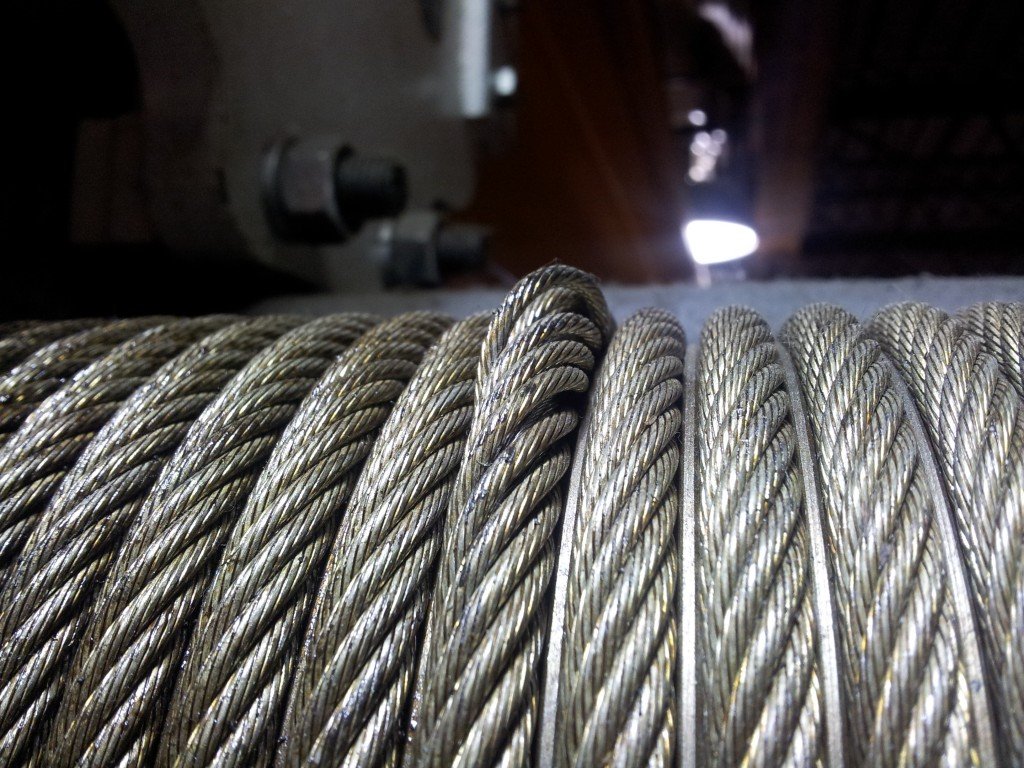
How to Measure Crane Wire Rope Diameter and Track Reduction
For maintenance technicians and inspectors taking repeatable rope-diameter measurements and comparing them with commissioning records.
Quick Answer
Wire rope diameter reduction is a warning sign for wear, core damage, corrosion, or strand compaction. Measure across the crowns of opposite strands with proper calipers, compare with the new-rope baseline and manufacturer/site discard limits, and investigate any unusual reduction or uneven diameter.
Diameter tolerance queries usually come from buyers or maintenance teams trying to decide whether a rope is still acceptable. The important point is this: the nominal diameter printed in the quote is not enough. You need the actual supplied diameter, a baseline record after installation, and repeatable inspection measurements.
How to Measure Wire Rope Diameter
- Use calipers that contact the outer crowns of opposite strands.
- Do not measure across valleys between strands; that under-reads the rope.
- Measure at multiple locations, especially high-wear zones around sheaves and drum contact areas.
- Record the rope under similar condition where possible: unloaded, accessible, clean, and safe.
- Compare against baseline readings from commissioning, not only nominal catalog diameter.
What Diameter Reduction Can Mean
| Observation | Possible Cause | Action |
|---|---|---|
| Gradual uniform reduction | External wear and normal service aging | Trend readings and compare with discard criteria. |
| Sudden reduction in one zone | Core failure, crushing, or localized damage | Remove from service until competent inspection confirms condition. |
| Uneven diameter around rope | Distortion, strand movement, or crushing | Inspect drum winding, sheaves, and rope path. |
| Reduction with corrosion | Loss of metallic area may be hidden internally | Consider NDT/MRT and replacement depending on severity. |
Buyer Checklist for New Rope Supply
- Ask for nominal diameter, actual tolerance, rope construction, core type, grade, and minimum breaking force.
- Ask the vendor to record baseline diameter after installation.
- Ask which diameter reduction limit will trigger discard at your site.
- Ask whether sheave groove wear or drum condition could accelerate diameter loss.
- Keep rope certificate and inspection sheet together for future replacement decisions.
FAQ
Can diameter alone decide rope rejection?
No. Diameter reduction is important, but the final decision should also consider broken wires, corrosion, deformation, heat damage, terminations, duty, rope construction, and inspection history.
Where should diameter be measured?
Measure multiple points, especially high-wear zones near sheaves, drum contact areas, and any suspected damaged section. Keep those points consistent for trend comparison.
Next Action: Record a Diameter Baseline
Measure at identified reference points, save the readings with the rope certificate and use the same points during future inspections.