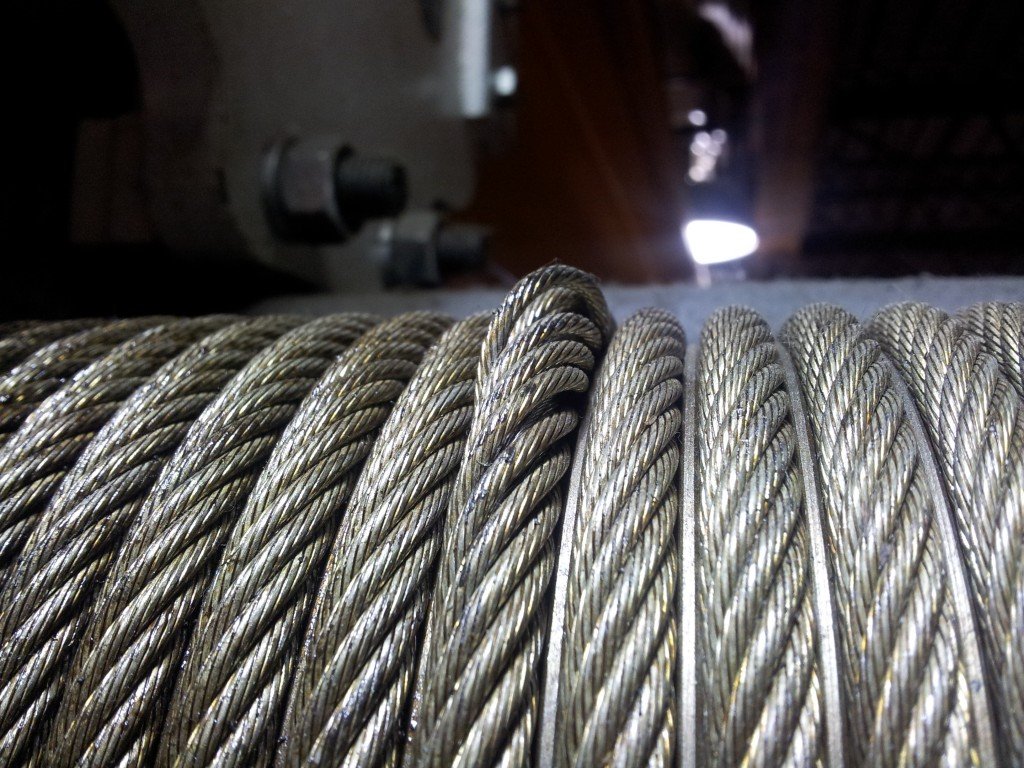
Broken Wires in Wire Rope: Patterns, Counts and Decisions
For crane inspectors and maintenance engineers who have found visible wire breaks and need to classify their pattern before deciding what to do.
Quick Answer
Broken wires become serious when they exceed the applicable discard limit, appear in clusters, occur near end terminations, appear as valley breaks, or combine with corrosion, diameter reduction, crushing, kinking, or poor drum winding. Do not approve continued crane use only by counting visible broken wires casually.
Broken wires are one of the most searched and most misunderstood wire rope defects. A few distributed crown breaks can appear as a rope ages, but clustered breaks or breaks near terminations can indicate a local failure zone. The safe decision depends on the rope construction, inspection length, operating duty, environment, and applicable standard such as ISO 4309.
Broken Wire Patterns to Separate
| Pattern | What It Suggests | Buyer / Inspector Action |
|---|---|---|
| Distributed crown breaks | Normal fatigue may be developing across the rope surface. | Count over the required inspection length and trend at each inspection. |
| Clustered broken wires | Local damage, sheave issue, crushing, or severe bending fatigue. | Treat as higher risk; inspect sheaves, drum, and rope path. |
| Broken wires near termination | High stress at socket, clamp, wedge, or dead-end area. | Stop and get competent inspection; termination zones are critical. |
| Valley breaks | Possible internal fatigue or contact stress between strands. | Escalate for detailed inspection and possible NDT/MRT. |
| Broken wires with corrosion | Loss of metallic area plus fatigue. | Do not rely only on visual count; corrosion changes the risk. |
How to Count Broken Wires Properly
- Record rope diameter, construction, crane, hoist, location, and date.
- Count broken wires over the inspection lengths required by your standard or site procedure, often expressed in multiples of rope diameter such as 6d and 30d.
- Separate body-of-rope breaks from termination-area breaks.
- Record whether breaks are spread out or concentrated in one rope zone.
- Photograph the location and mark it for follow-up comparison.
When Broken Wires Should Trigger Replacement
Replace or remove the rope from service when the broken wire count exceeds the accepted discard limit, when broken wires are clustered, when breaks appear near terminations, or when broken wires appear with other defects such as kinking, birdcaging, crushed strands, diameter reduction, heat damage, or severe corrosion.
What Buyers Should Ask Vendors
- What broken wire discard criteria will be used at handover?
- Will the maintenance team receive an inspection sheet with rejection triggers?
- What rope construction and minimum breaking force are supplied?
- What sheave and drum checks are required if broken wires appear early?
- When should NDT or electromagnetic rope inspection be used?
FAQ
Are broken wires in wire rope always a rejection?
Not always. The decision depends on the broken wire count, inspection length, rope construction, location, clustering, and other defects. However, clustered breaks, termination-area breaks, valley breaks, corrosion, and sudden diameter reduction should be treated seriously.
What is the biggest mistake when checking broken wires?
The biggest mistake is only counting visible surface breaks without recording their exact location, inspection length, rope condition, and related causes such as sheave wear, poor spooling, corrosion, or wrong rope construction.
Next Action: Map and Record the Breaks
Mark each break on a rope sketch, record the reference length and location, then use the applicable ISO 4309 criteria for the discard decision.