Motion limits
Hoist, cross-travel and long-travel limits should stop motion before the crane reaches unsafe mechanical contact.
Check: type, make, covered motion, reset behavior, adjustment and FAT/SAT test.
Do not let "standard safety devices included" pass as a specification. Define what protects each crane motion, how it stops, how it resets, how it is tested and what evidence is handed over.
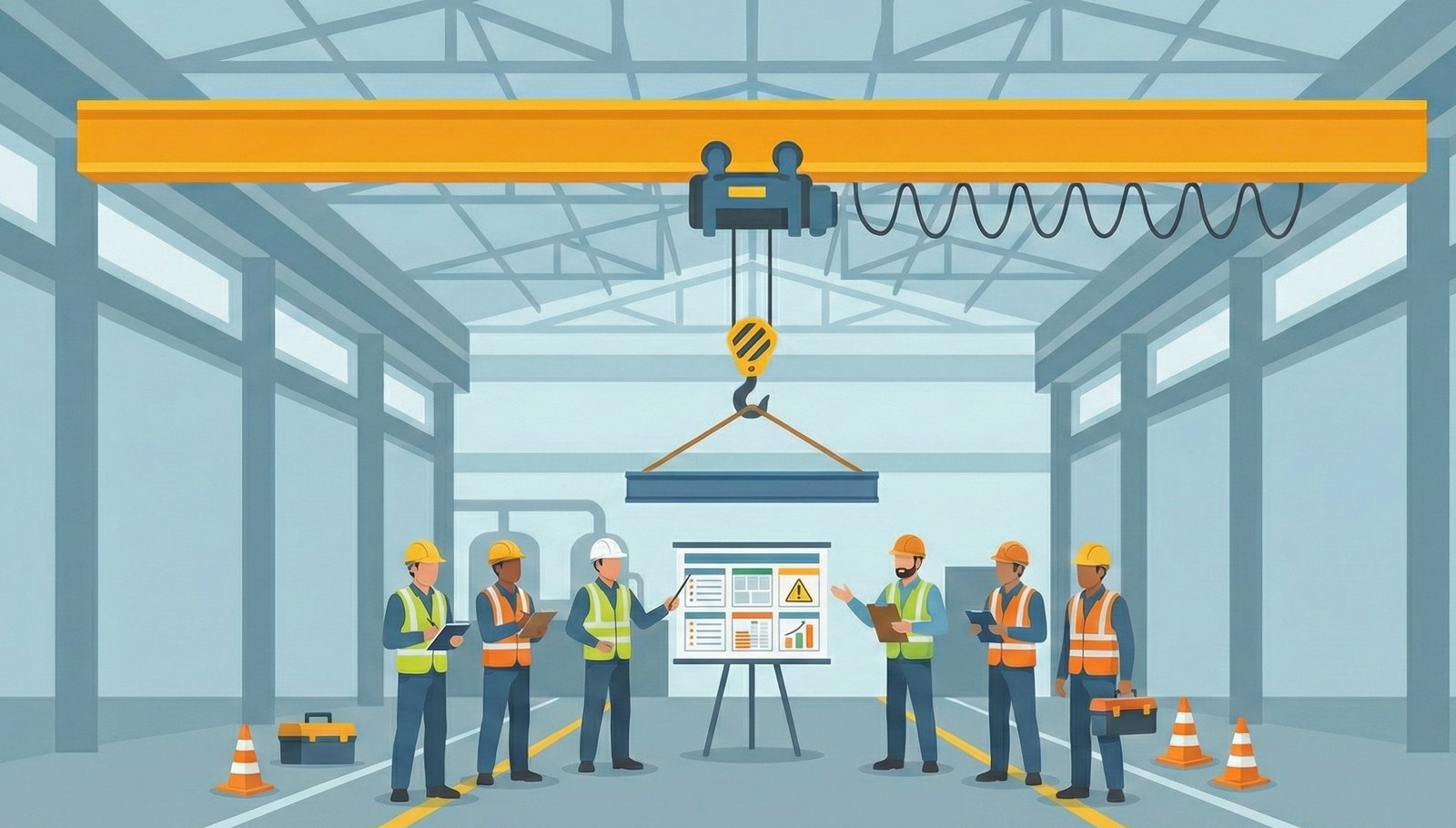
A complete EOT crane safety scope should name the devices, motions protected, trip behavior, reset method and test evidence. At minimum, clarify hoist limits, travel limits, overload limiter, emergency stop, isolator, warning devices, buffers/end stops, anti-collision if relevant, FAT/SAT checks, load-test responsibility and handover documents.
A crane safety device is useful only when it is selected, wired, tested and maintained as part of the complete crane motion. The buyer’s job is to force the supplier to make the safety logic visible before PO release.
Hoist, cross-travel and long-travel limits should stop motion before the crane reaches unsafe mechanical contact.
Overload devices must be identified, calibrated and tested using a defined method.
Buffers, end stops, travel limits and anti-collision logic should work together, especially in shared bays.
Name required devices and ask for make, type, motion covered, test method and exclusions.
Reject one-line safety claims until every bidder states the same safety scope.
Verify device list, wiring, drawings, certificates and vendor test evidence before dispatch.
Test motions, emergency stops, limits, overload method, buffers and handover records at site.
| Device or check | Ask for | Acceptance evidence | Common gap |
|---|---|---|---|
| Hoist upper/lower limits | Type, make, normal/final limit logic, lower-limit/drum-wrap basis and reset method. | Functional limit test at agreed approach speed. | Upper limit included, lower limit not discussed. |
| Travel limits | Cross-travel and long-travel limit philosophy, end-stop relation and stopping behavior. | Motion stops before unsafe end impact. | Physical end stop used as normal stopping method. |
| Overload limiter | Sensor type, trip setting, display/indication, calibration and bypass control. | Calibration certificate and site verification method. | No trip value, certificate or test method. |
| Emergency stop | Locations, reset behavior, control circuit relation and operator stations covered. | E-stop test from pendant/radio/panel as applicable. | Emergency stop present but not tested at SAT. |
| Buffers and end stops | Buffer type, energy basis, approach speed, mounting and relation to travel limits. | Visual check, mounting check and scope confirmation. | Buffers listed without energy or speed basis. |
| Anti-collision | Need assessment for shared bay, multiple cranes, transfer areas and blind travel zones. | Slowdown/stop test where included. | Multiple-crane bay quoted without collision logic. |
| Load test and handover | Test load, instruments, witness points, certificates, manuals and punch-list closure. | Signed FAT/SAT, load-test record and document register. | Payment released before documents close. |
Before comparing crane prices, ask every bidder to complete the same safety-device and acceptance schedule.