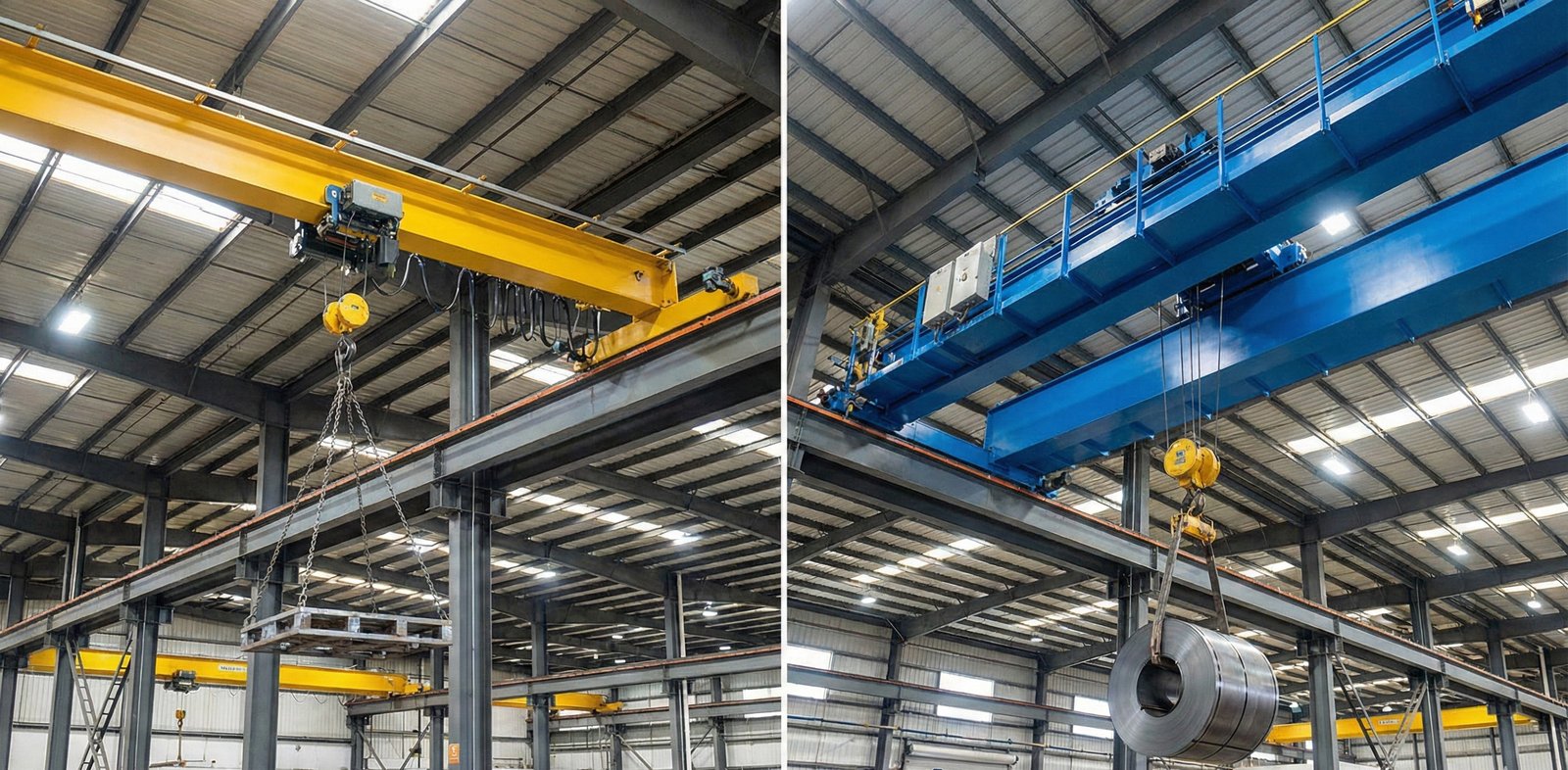
Define what the crane must do
The best buying process starts with the plant task, not a capacity copied from an old crane or vendor brochure.
1. Define the application
Describe what will be lifted, how it is attached, where it moves, how frequently it operates and what happens if the crane is unavailable. Include normal loads, maximum loads, below-hook attachments, load sensitivity, operating shifts and future changes that are reasonably foreseeable.
2. Capacity and span
Specify safe working load after including the lifting beam, magnet, grab or other attachment carried below the hook. Define crane span from runway-rail centre to centre, not building width. Ask suppliers to state design loads, crane self-weight, maximum wheel loads and assumptions used for the runway interface.
3. Lift and headroom
Define vertical hook travel, highest required hook position, lowest hook position and horizontal hook approaches. Record roof, beam, service-platform and equipment obstructions. Headroom often determines whether a standard hoist, low-headroom arrangement, single girder or double girder crane is suitable.
4. Duty classification
Capacity alone does not size a crane. Provide load spectrum, cycles per hour, operating hours, starts, travel pattern and expected life. Ask each bidder to state the selected duty classification for the complete crane and important mechanisms, along with the input assumptions.
5. Speeds and controls
Define hoisting, cross-travel and long-travel speeds from process needs. State whether slow approach, dual speed, variable frequency control, inching, synchronization or accurate positioning is required. Select pendant, radio remote or cabin control based on operator visibility, travel path and site risk.
Define site, components and safety
6. Indoor or outdoor environment
State indoor or outdoor service, temperature, humidity, dust, fumes, corrosion, rain exposure, wind, hazardous zones and washdown conditions. These inputs affect enclosure protection, insulation, paint system, electrification, weather covers, storm restraints and maintenance access.
7. Electrical supply
Provide system voltage, frequency, phase, control voltage, earthing arrangement, permissible voltage variation and the purchaser's power termination point. For long bays or multiple cranes, define simultaneous demand, current per crane, conductor length and feed positions before selecting DSL or busbar capacity.
8. Component makes
Request a bill of material covering motors, brakes, gearbox, bearings, wire rope, hook block, wheels, controls, VFDs, contactors, radio remote, festoon and DSL. Ask bidders to identify manufacturer, model or series, rating, country of origin where relevant, and proposed alternatives. Compare serviceability and spare availability, not brand names alone.
9. Safety requirements
Define motion limits, emergency stop, overload protection, brakes, buffers, warning devices, anti-collision requirements, derailment protection, access controls and isolation. Requirements depend on the application and jurisdiction; avoid treating a generic checklist as final engineering approval.
10. Documentation
List every required document and its submission stage: general arrangement, design basis, wheel loads, electrical drawings, BOM, manuals, certificates, inspection records, test reports, spare list and as-built drawings. Tie document approval and final handover to payment milestones.
11. Installation scope
Define who surveys the runway, unloads material, provides access equipment, erects the crane, aligns rails, supplies power, performs cabling, obtains permits, provides test weights and clears the work area. State shutdown windows, inductions, working hours and site restrictions.
Accept the crane and select the supplier
12. Testing and acceptance
Define factory inspection, pre-dispatch checks, site acceptance, proof-load testing, functional tests, safety-device checks, documentation closure and punch-list responsibility. Record the acceptance standard, witness points, test instruments and who supplies test loads.
13. Warranty and service
Compare warranty start point, duration, exclusions, response time, travel charges, consumables, preventive visits, spare availability and support location. Clarify whether warranty begins at dispatch, commissioning or acceptance, especially when site readiness can delay installation.
14. RFQ template
Issue one structured RFQ containing the requirement, bidder response schedule, deviation format, BOM, document register, installation matrix, testing plan and commercial schedule. Require bidders to state deviations explicitly instead of allowing silent assumptions.
15. Supplier shortlist
Build an initial list using product and location evidence, then verify relevant projects, design capability, manufacturing or service scope, references, documentation quality and commercial responsiveness. Use the directory comparison as a factual starting point, not a supplier ranking.
Turn the requirement into one comparable RFQ
Complete the technical fields first, then send the same requirement and response schedules to every shortlisted supplier.